

Dignity first campaign
Changing the language around money and debt to challenge stigma and improve access to support.
Breaking down barriers to support
People experiencing financial challenges deserve to access and receive support without fear of judgement. However, stigma continues to have a significant impact on peoples' willingness to seek help, and their journey towards financial wellbeing. We believe that language holds the key, and that by changing our language, we can challenge this stigma and dismantle barriers that hinder access to money and debt advice. The campaign calls for a collective effort to make conversational change to end the use of stigmatising language. Read our Dignity First Report for a comprehensive overview of our mission to transform language and silence stigma in money and debt.
Resources
Please see our resources below for information on the Dignity First campaign.
-
Dignity First language guide
January 2024
Practical guidance for using respectful, person-first language when talking about money and debt.
-
Dignity First media guide
January 2024
Resources for journalists and organisations to help reduce stigma through responsible reporting and communication.
-
Dignity First report
January 2024
Research exploring how language influences stigma and access to money and debt support in Scotland.
-
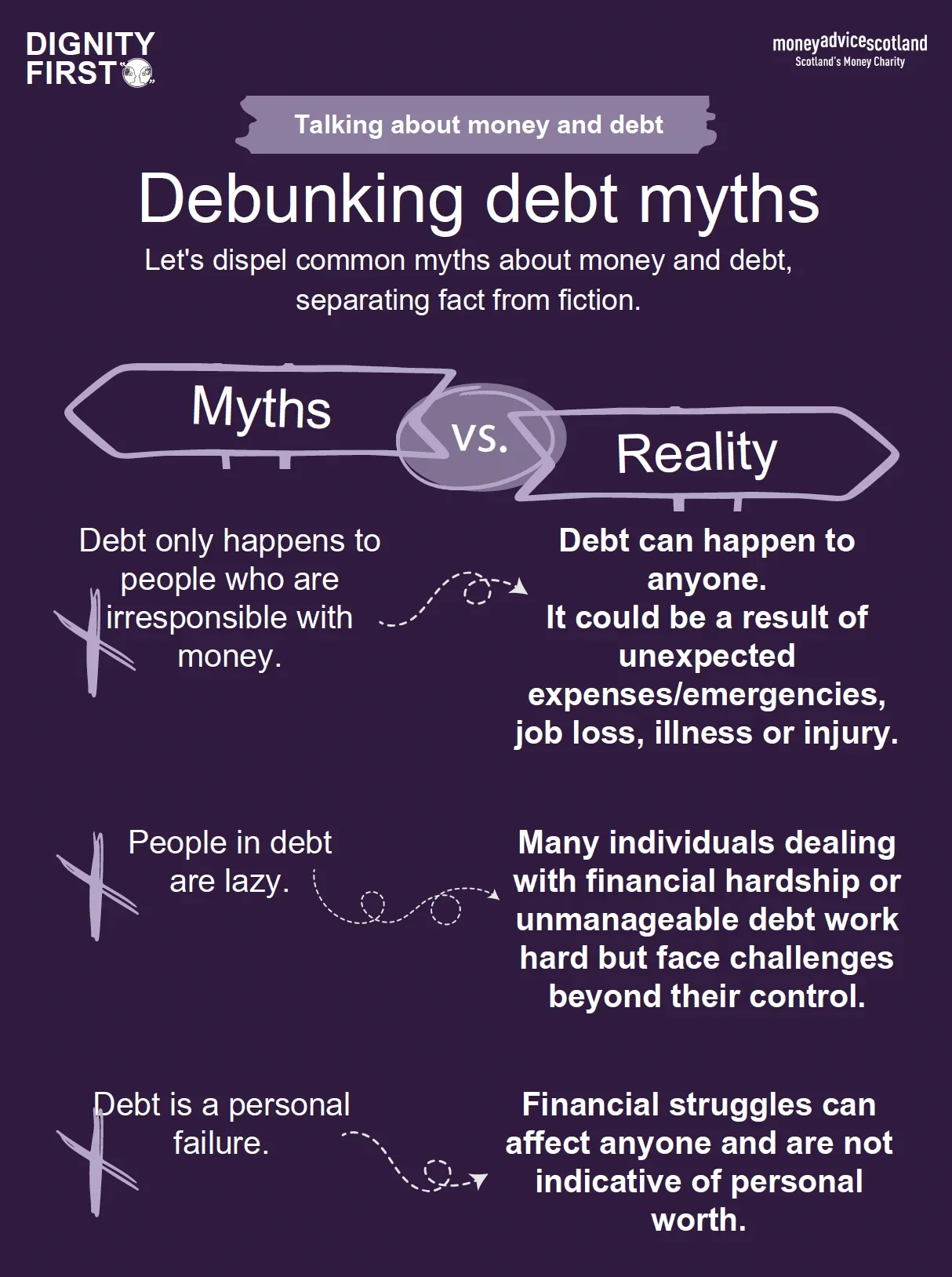
Dignity First debunking myths
Challenging common misconceptions about money, debt and financial hardship.
-
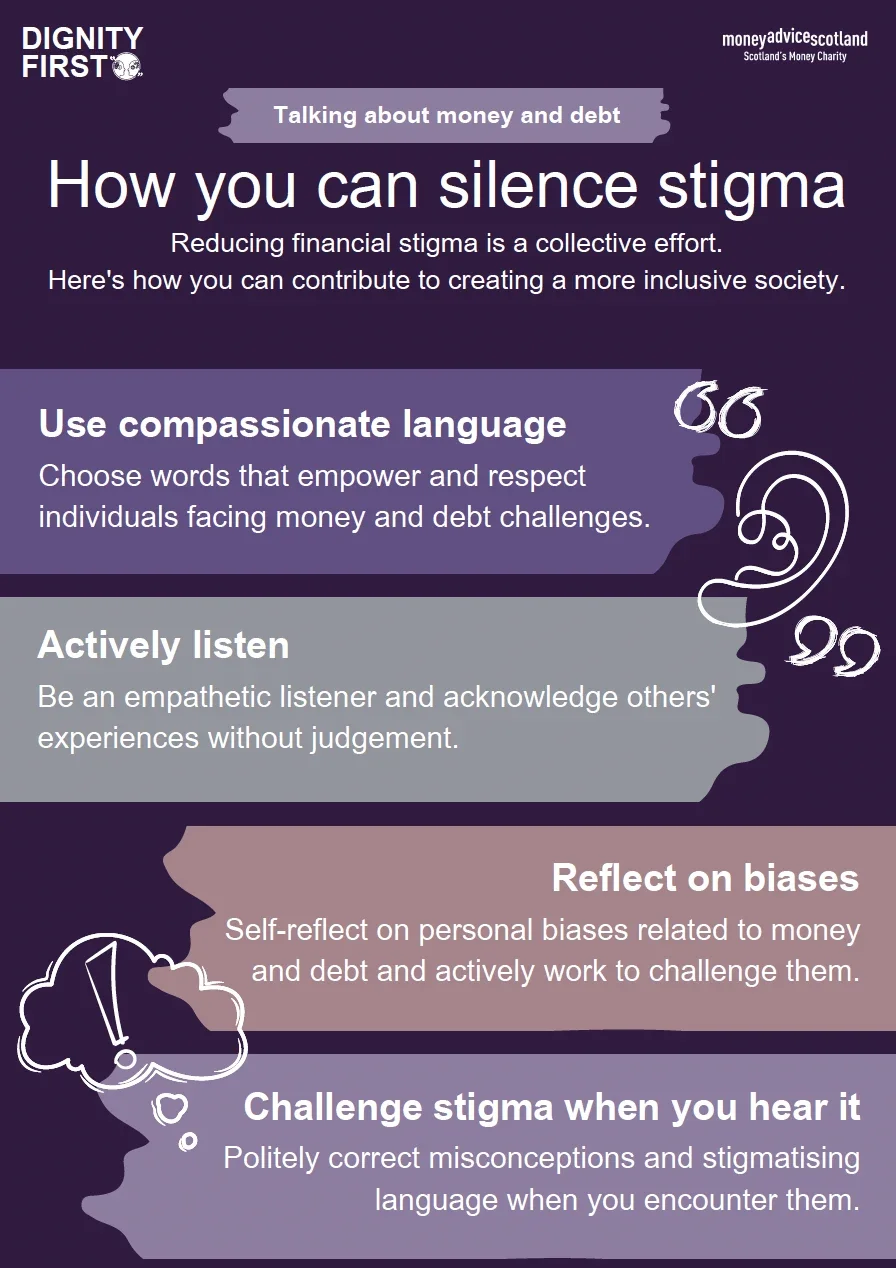
Dignity First silencing stigma
Simple actions everyone can take to reduce financial stigma.
-
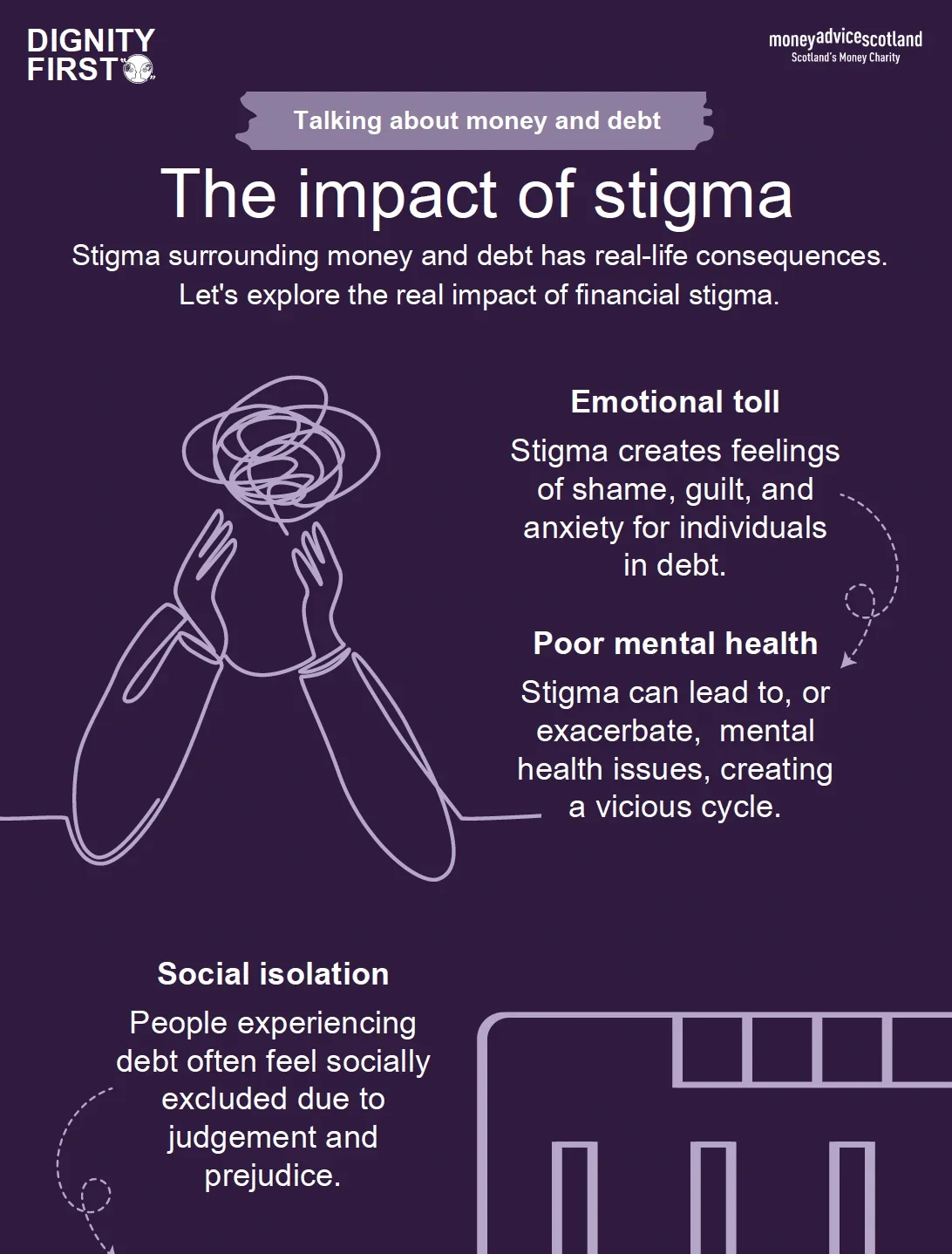
Dignity First the impact of stigma
Exploring how financial stigma affects wellbeing and access to support.
-
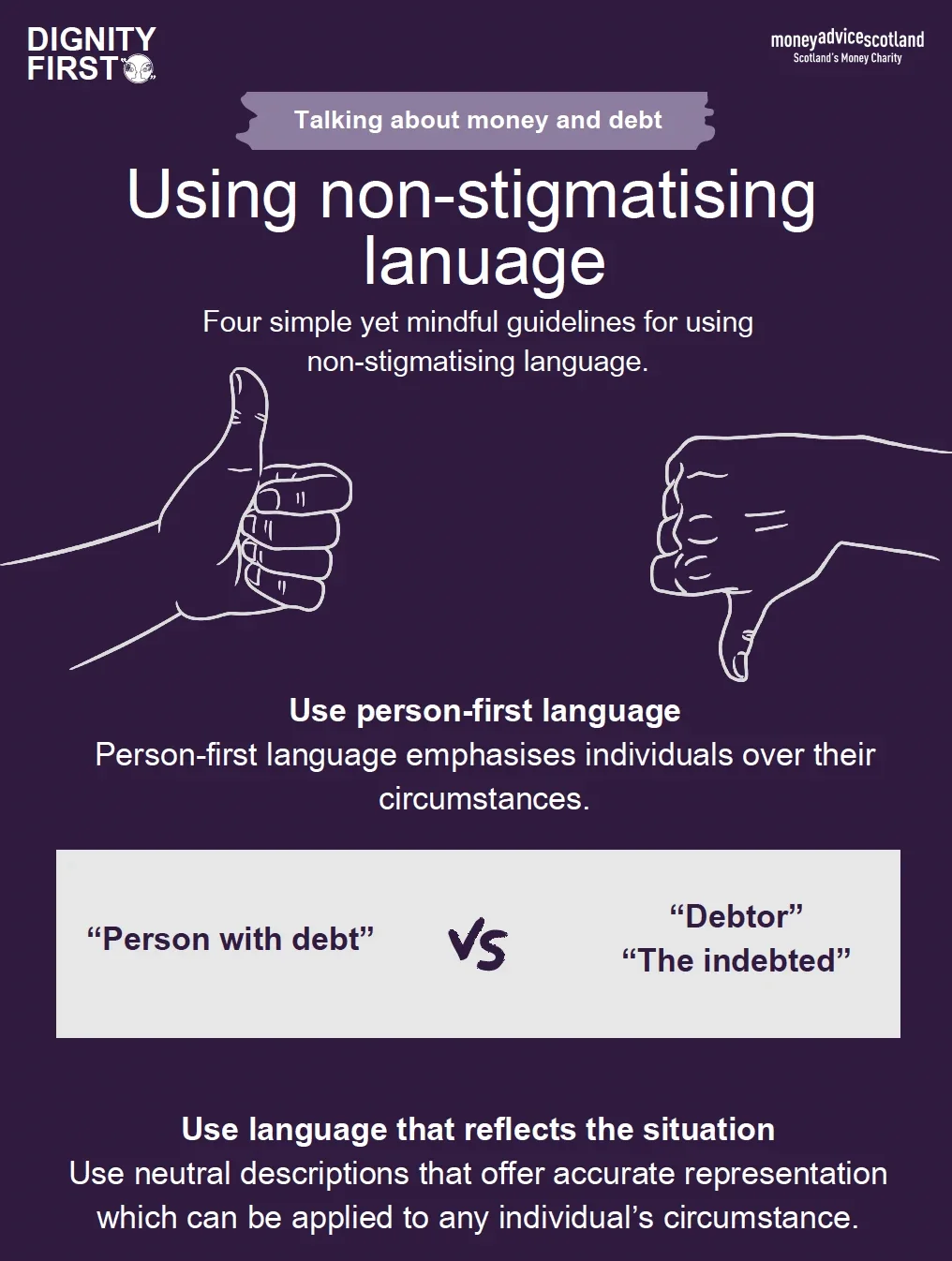
Dignity First using non-stigmatising language
Practical guidance for speaking about money and debt with dignity and respect.
-
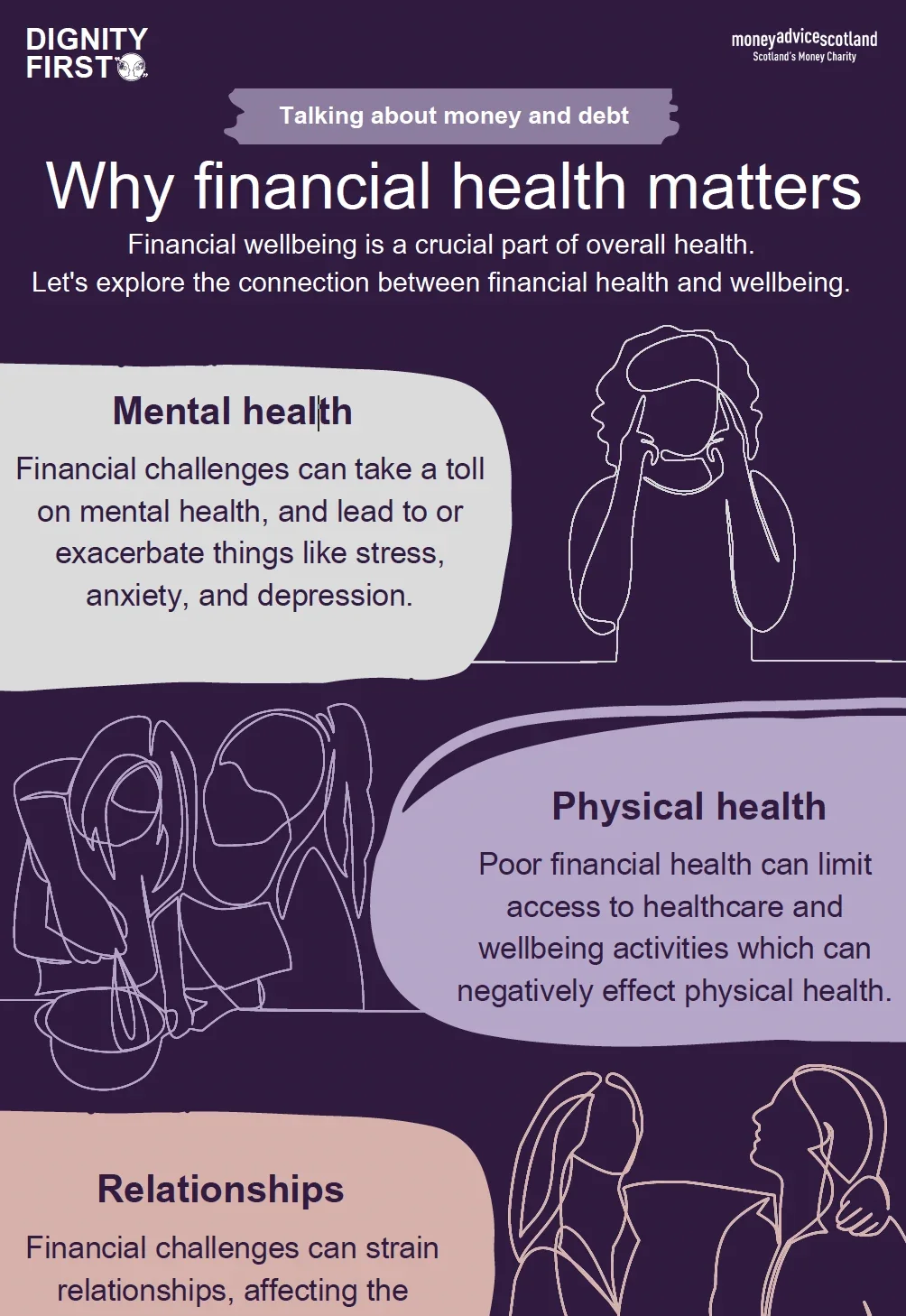
Dignity First why financial health matters
Understanding the connection between financial wellbeing and overall health.